
Open-Top vs Enclosed Self-Cleaning Litter Boxes: What Actually Matters to Your Cat
You’ve decided to stop scooping. The next question is harder: open top or enclosed? Brand comparison pages usually land on whichever style that brand happens to sell. The research tells a calmer story.
For most cats, the shape of the box matters far less than how clean it is. In a 2012 study published in the Journal of Feline Medicine and Surgery, researchers offered 28 cats both a covered and an uncovered box and found no overall difference in use. Only eight cats showed a clear preference, and they split evenly: four chose covered, four chose uncovered. The authors’ takeaway was that when boxes are cleaned at least daily, most cats don’t care which style they get.
That’s good news, because a self-cleaning box handles the “cleaned at least daily” part for you. So the real question isn’t which style cats prefer in general. It’s which style suits your cat, your home and your routine.
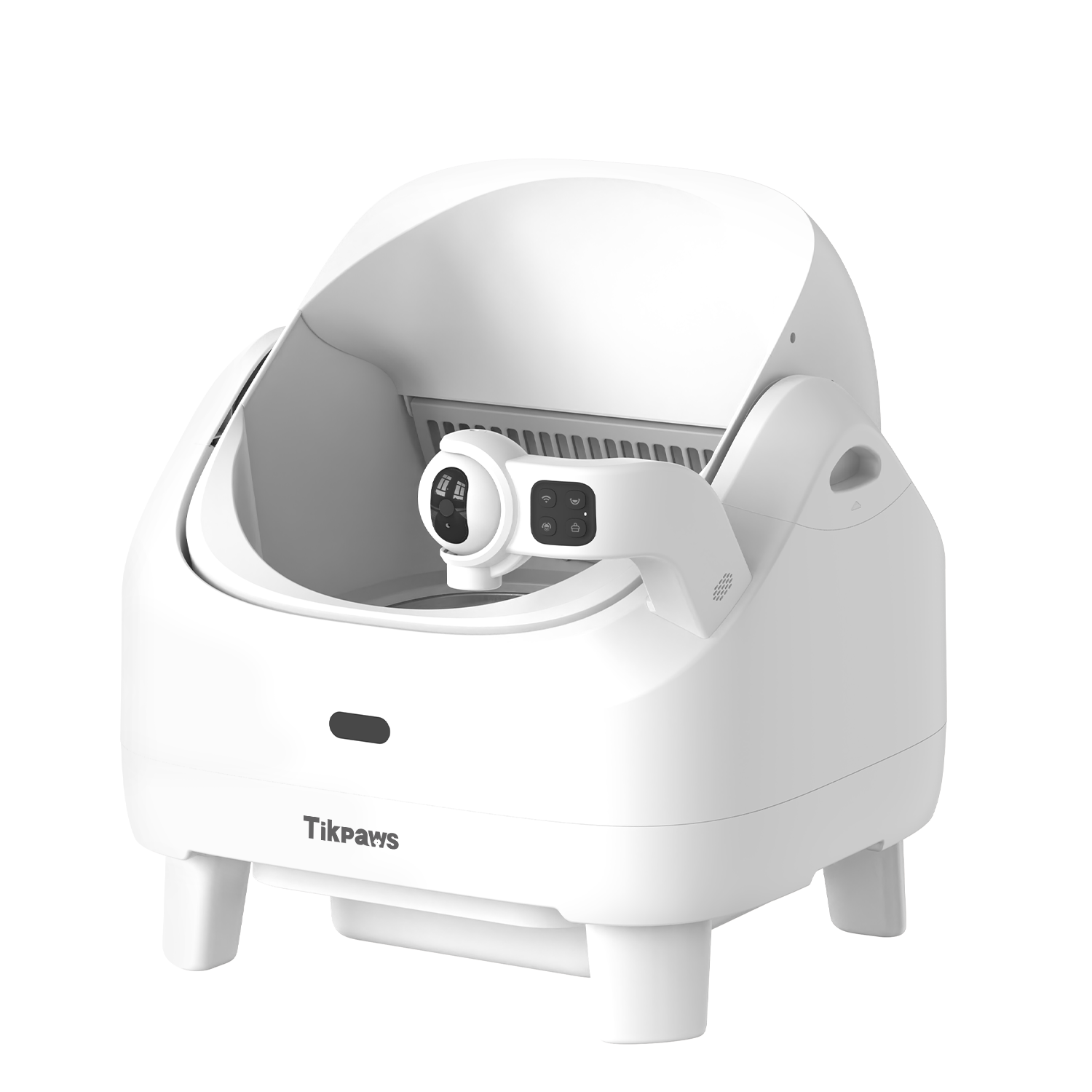
What “open-top” and “enclosed” mean for automatic litter boxes
An enclosed self-cleaning box is usually a globe or hooded shape. Your cat walks in through a single opening, and the drum or rake works inside a closed shell.
An open-top self-cleaning box keeps the walls low enough that your cat can see out while using it. Cleaning happens with a sifting mechanism underneath or behind the litter, and waste drops into a sealed drawer below.
Both designs clean themselves. The differences show up in how your cat gets in, how odor and litter behave, and how much you can see.
The trade-offs, side by side
TABLE 01:Open-Top vs Enclosed Self-Cleaning Litter Boxes at a Glance
| Open-top | Enclosed | |
|---|---|---|
| Entry | Wide, see-through, easy exit | Single opening, more private |
| Best for | Nervous, large or senior cats; multi-cat homes | Cats that already like hooded boxes |
| Odor | Depends on sealed drawer and odor control | Hood traps odor; still depends on drawer |
| Litter scatter | More likely; use a mat | Usually less |
| Visibility | Easy to check litter and cat at a glance | Need to open or use app to check |
Both styles clean themselves. The right choice depends on your cat's comfort and your home.A few of these are worth unpacking.
Entry and comfort
An enclosed box has one way in and one way out. Most cats are fine with that. But cats that are nervous, cats in multi-cat homes where another cat likes to ambush at the door, and some senior cats may hesitate at a tunnel-style entrance. An open top gives them a view of the room and an easy exit, which is why open designs are often suggested for cats that seem wary of hooded boxes.
Size matters here too. A large cat that has to crouch to fit through an opening may simply choose the floor instead.
Odor
Enclosed boxes trap odor inside the shell, which feels like an advantage to you. Your cat’s nose is much closer to that trapped air than yours is, though. With either style, the biggest factor in odor is how fast waste is removed and sealed away. Look for a sealed waste drawer, plus odor control such as a deodorizer or active air treatment, rather than relying on the hood alone.
Litter tracking and scatter
Enclosed boxes generally keep more litter inside. Open-top boxes rely on higher side walls, a mat at the entrance, and your cat’s digging habits. If your cat is an enthusiastic digger, plan for a litter mat either way.
Seeing what’s going on
This is where open-top designs have a quiet advantage. You can glance in and see the litter level and whether a clump was left behind. A built-in camera can see your cat clearly, and you can confirm visits without opening anything.
Which style suits your cat?
Use your cat’s behavior, not general preference charts, to decide.
TABLE 02:Which Style Suits Your Cat?
| If your cat… | Consider |
|---|---|
| Happily uses a hooded box now | Enclosed |
| Hesitates at doorways or hoods | Open-top |
| Is large or long-bodied | Open-top, or check the opening size carefully |
| Is a senior or has stiff joints | Open-top with a low entry |
| Kicks litter everywhere | Enclosed, or open-top plus a litter mat |
| Shares the box with another cat that blocks the door | Open-top |
Your cat's habits are a better guide than general preference charts.If your cat already uses a hooded manual box happily, an enclosed automatic box is a natural next step. If your cat avoids the hood, hesitates at the door, or is large enough that the opening looks tight, an open-top box removes those barriers.
The researchers behind the 2012 study made a practical suggestion: if you’re unsure, offer a choice. Keep your cat’s current box out for the first week alongside the new one and watch which one gets used.
How to switch to a self-cleaning box without a standoff
Most cats adapt within days. You can make it easier:
- Set it up next to the old box, not in a brand-new location.
- Use the litter your cat already knows. Mix in a scoop of used litter from the old box so it smells familiar.
- Leave automatic cleaning off for the first few days. Let your cat use it as a regular box before the mechanism starts moving.
- Turn on automatic cleaning once your cat uses it consistently, and run the first few cycles while you’re home.
- Remove the old box only after the new one is used reliably for several days.
If your cat stops using any litter box suddenly, that’s worth a call to your vet. Changes in litter habits can be an early sign of urinary or digestive problems.
Safety: the question to ask before you buy
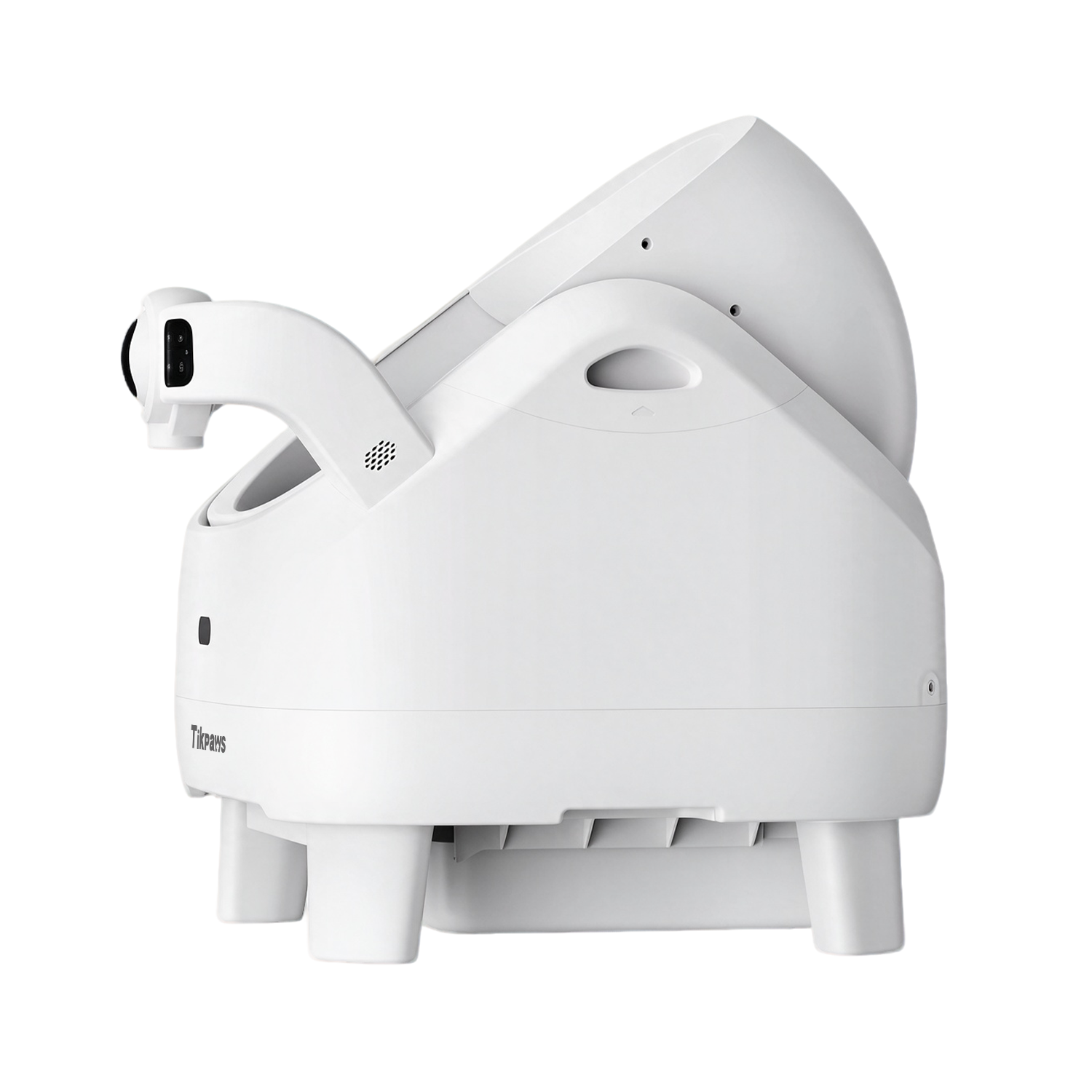
Whichever style you choose, ask how the box knows your cat is there. A well-designed self-cleaning box uses more than one sensor, typically motion and weight, and stops cleaning the moment a cat approaches or steps in. Anti-pinch protection around moving parts and alerts for incorrectly installed covers are worth looking for too. Check the minimum cat weight the manufacturer recommends before using automatic cleaning with a kitten.
Where the Tikpaws Vista fits
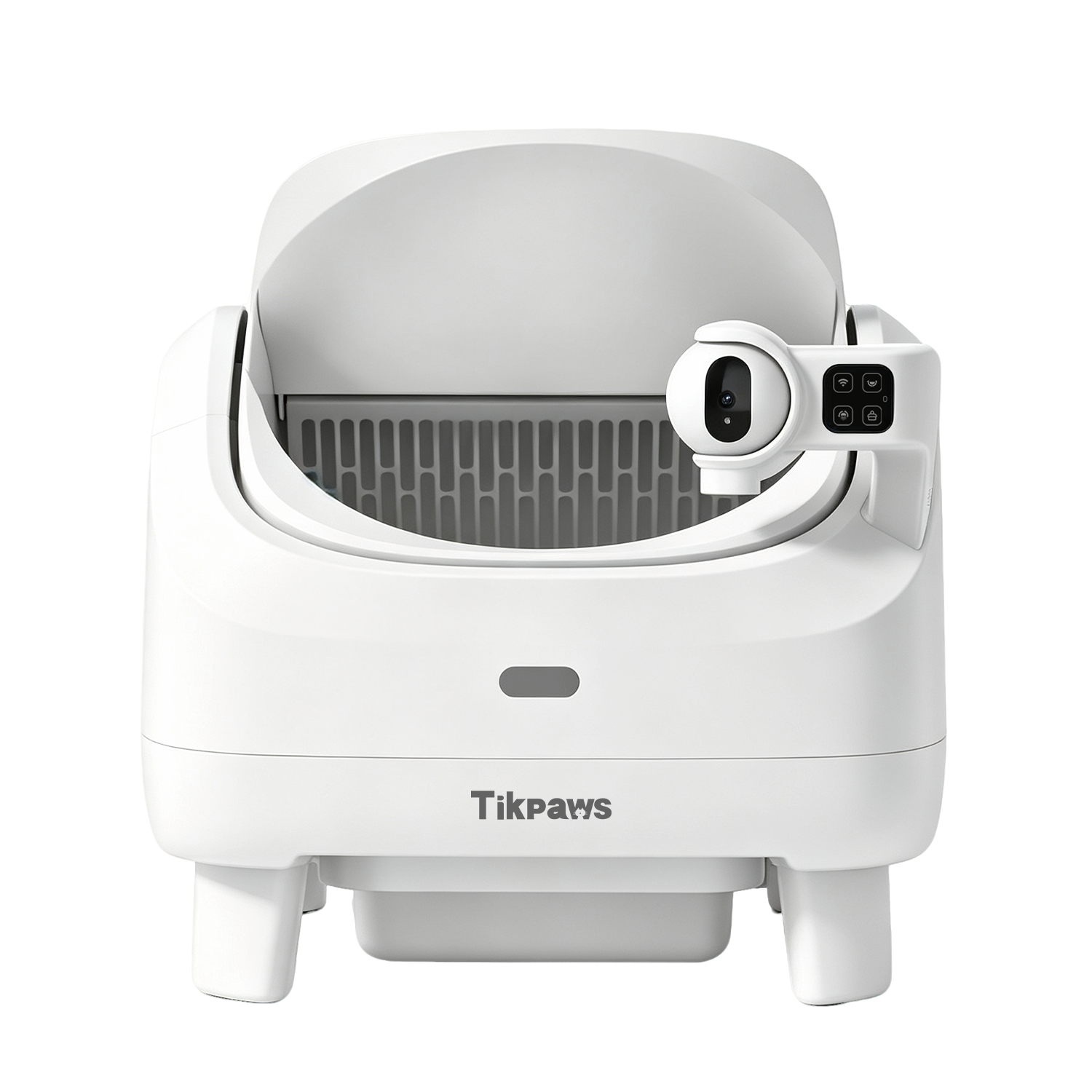
We designed the Tikpaws Vista Open-Top Smart Litter Box for cats that don’t love tunnels and for owners who want to see what’s happening. It has a 16.2 × 14.3 in open interior, motion and weight sensors that stop cleaning when a cat comes near, a separate 7L sealed waste drawer, and a built-in camera so you can check in from your phone. The app turns visits into daily, weekly and monthly reports, which makes changes in habits easier to spot.
If your cat is already happy in a hooded box, an enclosed model may be the smoother switch. That’s fine too. The cleaner box is the one your cat will use.
FAQ
Do cats prefer covered or uncovered litter boxes?
Most don’t have a strong preference. In a 2012 study of 28 cats, only eight showed a preference, split evenly between covered and uncovered. Cleanliness mattered more than style.
Are open-top self-cleaning litter boxes worse for odor?
Not necessarily. Odor depends mostly on how quickly waste is removed and sealed. An open-top box with a sealed waste drawer and active odor control can keep a room fresh.
Do open-top litter boxes make more mess?
They can let more litter escape if your cat digs hard. A litter mat at the entrance catches most of it.
Are self-cleaning litter boxes safe for kittens?
Check the manufacturer’s minimum weight. For very small kittens, many owners use scheduled cleaning while they’re home instead of automatic cleaning.
How long does it take a cat to get used to an automatic litter box?
Usually a few days to a couple of weeks. Leaving automatic cleaning off at first and placing it beside the old box helps.